
1.2 seconds from camera to barrier. No card to lose, no guard at the gate.
A municipality serving more than 400,000 residents controlled access to dozens of sites with key cards, hand-operated barriers and security guards. We built AI-based vehicle and personnel recognition that decides in 1.2 seconds. No access cards, no guards on site.
Running access across many sites? Let's talk
Access control breaks at the gate
That is where most people pass through, and where the weak points pile up: a lost card, a barrier opened by hand, a guard who is supposed to know everyone.
Before: a patchwork across the city
The city operated dozens of yards, depots and facilities. Access relied on key cards, manually controlled barriers and on-site security staff.
- Cards went missing. Employees often lost or forgot them, which caused delays and security gaps.
- Guards cost a lot. Hiring one for every site was expensive.
- The system could not tell. It could not reliably separate authorised vehicles from unauthorised ones.
Bottlenecks and vulnerabilities, at the same time.
After: the gate recognises you
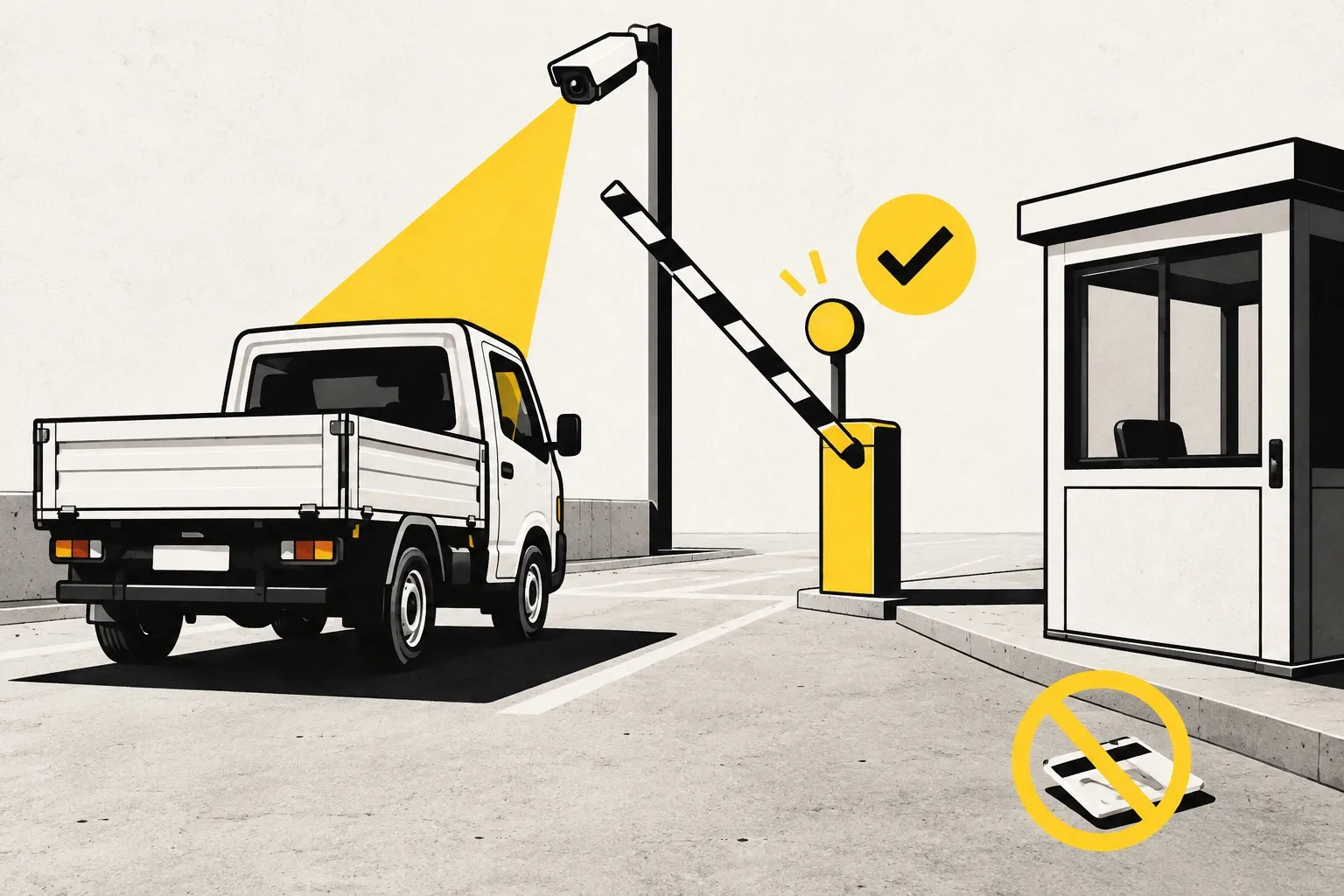
We developed a recognition system that uses computer vision to identify municipal employees and authorised vehicles in real time.
- The camera sees. A high-resolution camera at every gate captures and analyses the incoming vehicle and person.
- The system checks. It recognises licence plates and faces and matches them against a continuously updated municipal database.
- It all happens at the gate. Processing runs locally, at the gates.
- The barrier decides. In 1.2 seconds it opens, or stays closed, by itself.
It decides faster than you can tap a card: 1.2 seconds from camera to barrier, with no human involved.
What the city has now
- A 1.2-second decision, faster than any card-based or manual system.
- No physical access cards or key fobs.
- No on-site guards needed at the gates.
- No delays from lost, forgotten or faulty cards.
- Every entry and every denial logged in real time, with a full audit trail.
- One system across every depot, yard and facility.
Three ideas worth stealing
- The best access card is the one you cannot lose. If the system recognises you, there is nothing to forget.
- Security matters after the fact too. Every entry is logged, so you can always look back at who was there and when.
- One system, every site. What works at one gate has to work at all of them.
Many sites, one headache?
Tell us how access works at yours today. We reply within one business day.